I Chose a Scoreboard I Cannot See
1 min read
My measure of success is real local people who get in touch. Almost none of that is visible to the tools I built. Here is what they show me instead.
Read →
Notes on building, learning, and helping people put AI to work.
My measure of success is real local people who get in touch. Almost none of that is visible to the tools I built. Here is what they show me instead.
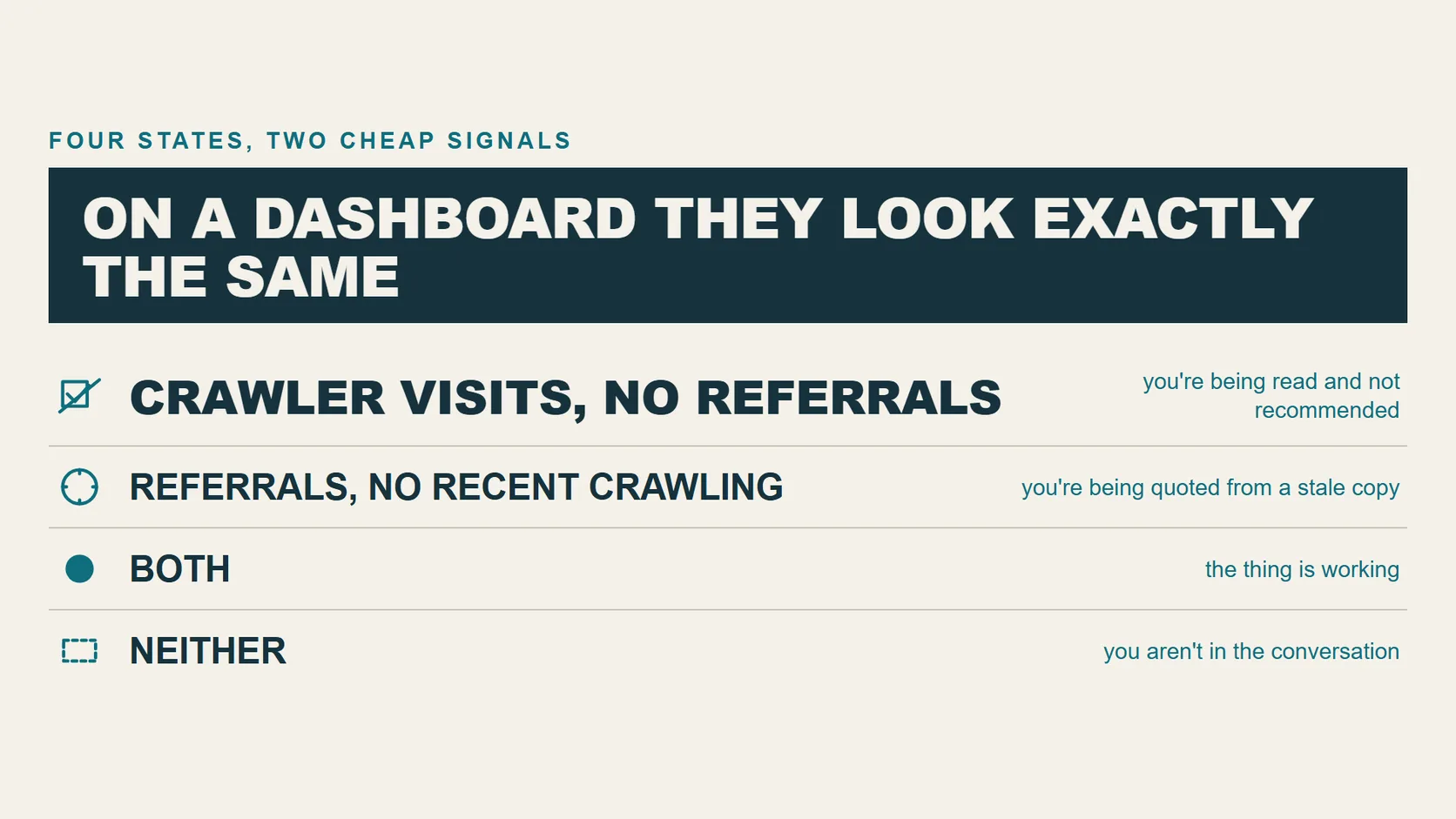
Read →One number can hide two opposite situations. Here is the cheap pairing that tells them apart, and what happened when I ran it on my own site.
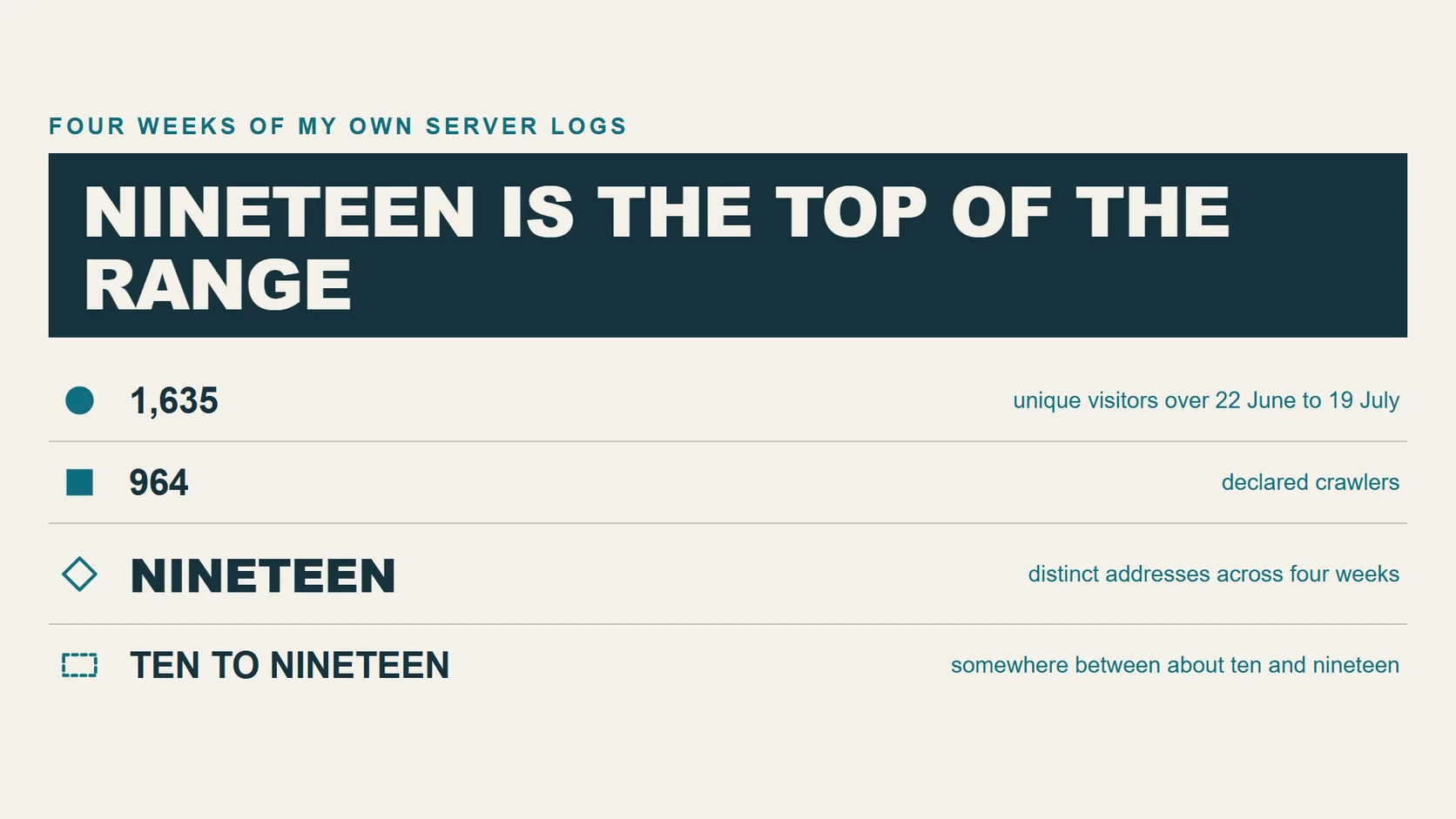
Read →I pulled four weeks of my own server logs expecting an audience. About fifty-nine percent of it was robots, and what was left was small enough to count.
Read →A log you never reread is a diary. Here is the five-slot card I use to turn an entry into something that actually gets seen again.
Read →Checking your AI's work is the part nobody has a method for. A running log is the cheapest one I have found, and you can start it this afternoon.
Read →Sorting a month of AI near-misses into classes turned up one that keeps repeating, and it is not the one I expected.
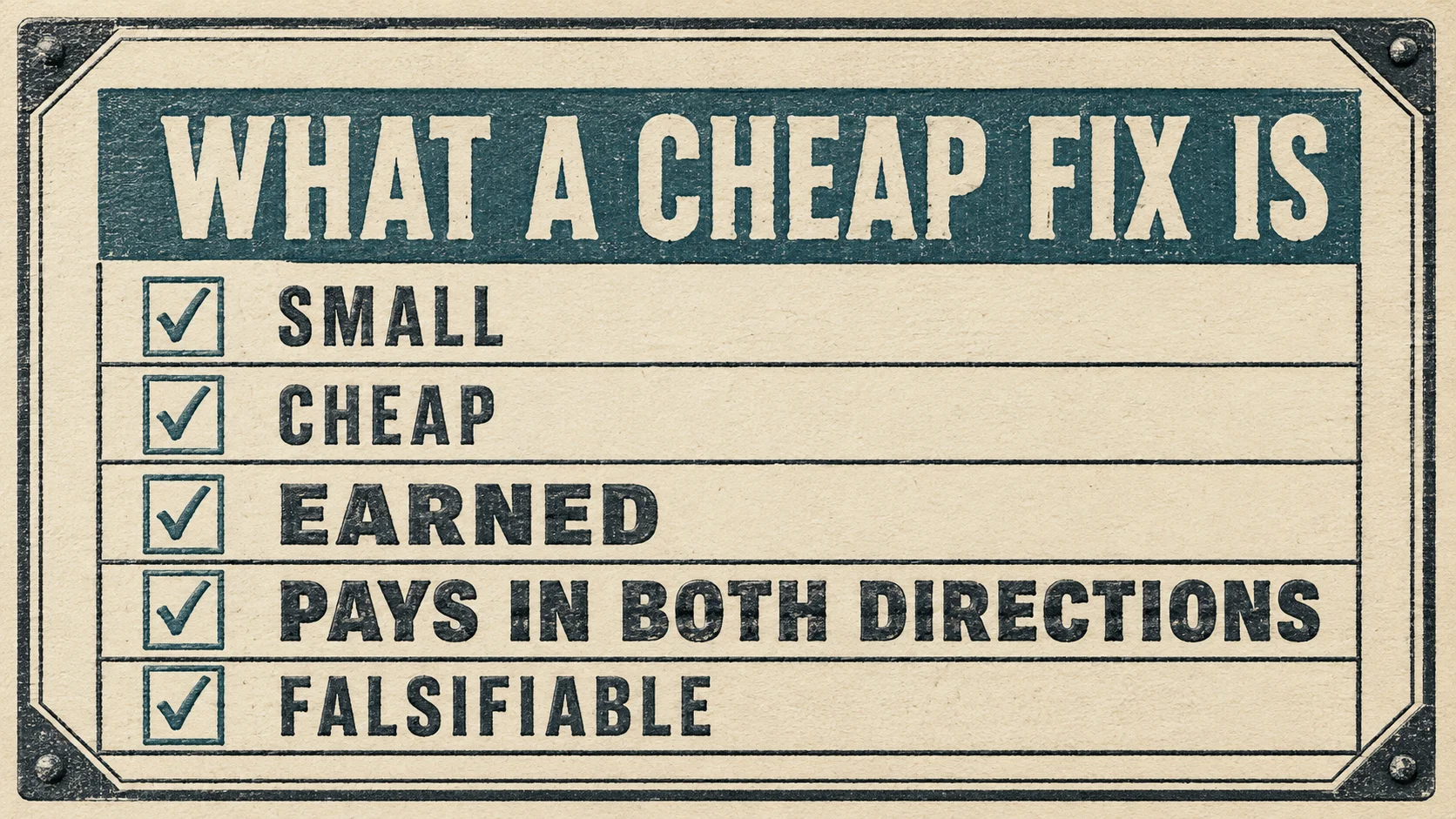
Read →A cheap fix is a small change you earn from something that nearly went wrong. Here is the bar I hold them to, and two that made it.
Read →Our avatar dissolved on light backgrounds. Boosting the contrast made it worse. A moss-green disc behind it fixed the problem without touching the artwork at all.
Read →My Obsidian vault holds about eight hundred notes. To build this project in public I needed to show eighteen of them. A vault is just a folder, so I pointed it at one.
Read →My AI assistant flagged two files as migration casualties, on the evidence that one was newer and twice the size of its replacement. We opened them. Both were fine.
Read →Four bugs passed review and died on live data. One reported zero licensed businesses in Oregon and was caught in a minute. The other looked completely reasonable.
Read →Our analyst is a snail. Hermes is fast; Oregon's cannabis data reports monthly and harvests once a year. An honest messenger moves at the speed of its subject.
Read →Oregon publishes its cannabis market data free through an open API. The price dataset had 77 views and 15 downloads in its lifetime. Not locked away — just unread.
Read →I ran a free accessibility checker over two sites I own. One came back with a single problem and no warnings; the other had eleven. They failed differently, and the useful part is what the tool could not tell me either way.
Read →People are asking AI tools for local recommendations. People almost never click the links inside an AI answer. Both of those were measured, and neither one cancels the other out.
Read →If you got an email warning that a federal web accessibility deadline is coming for your business, there is a good chance it was describing a real rule that does not apply to you. Here is how to tell.
Read →I ran a free accessibility check on my own site and it found nothing at all. That is not the same as passing, the tool says so itself, and then it hands you ten things it cannot check.
Read →Every night before 1840, London clerks held letters up to a candle to see how many sheets were inside, because the price depended on it. The reform that followed did not speed that up — it deleted it.
Read →I am building the systems I run my own work on one piece at a time. The newest two caught three older ones quietly failing within a week.
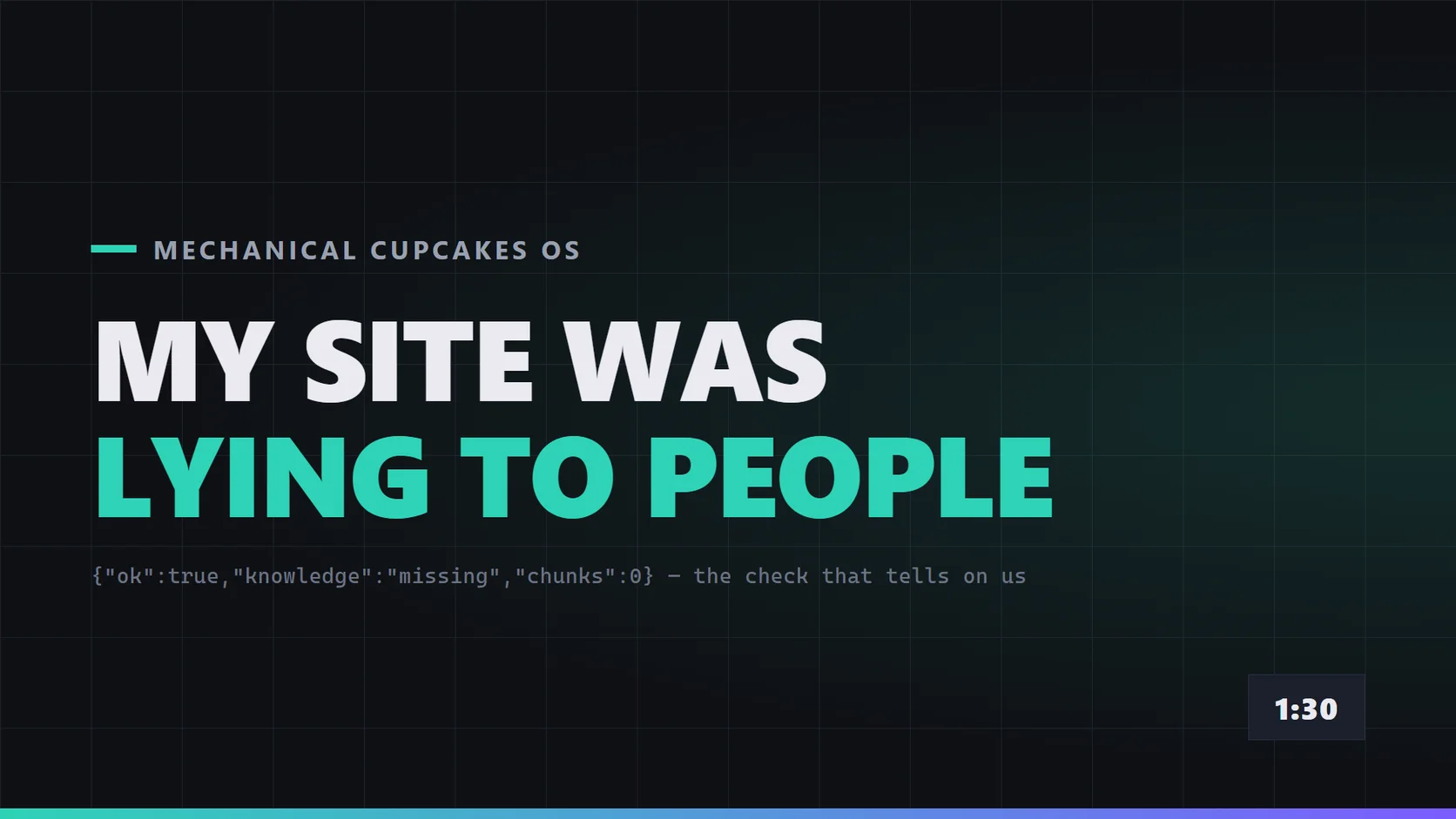
Read →I stopped adding things to my side project and audited what was already there. It had been telling visitors two things that weren't true.
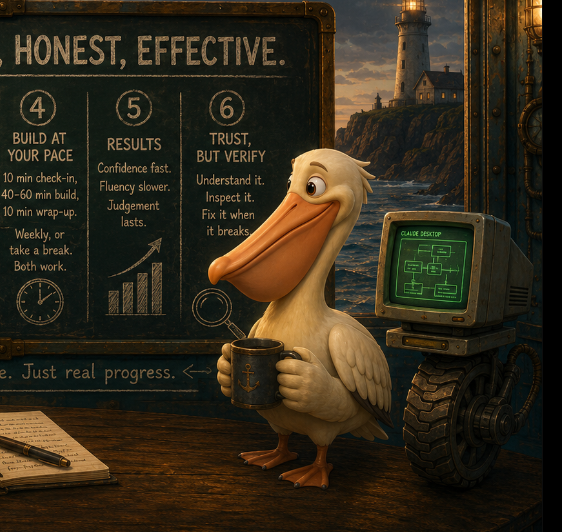
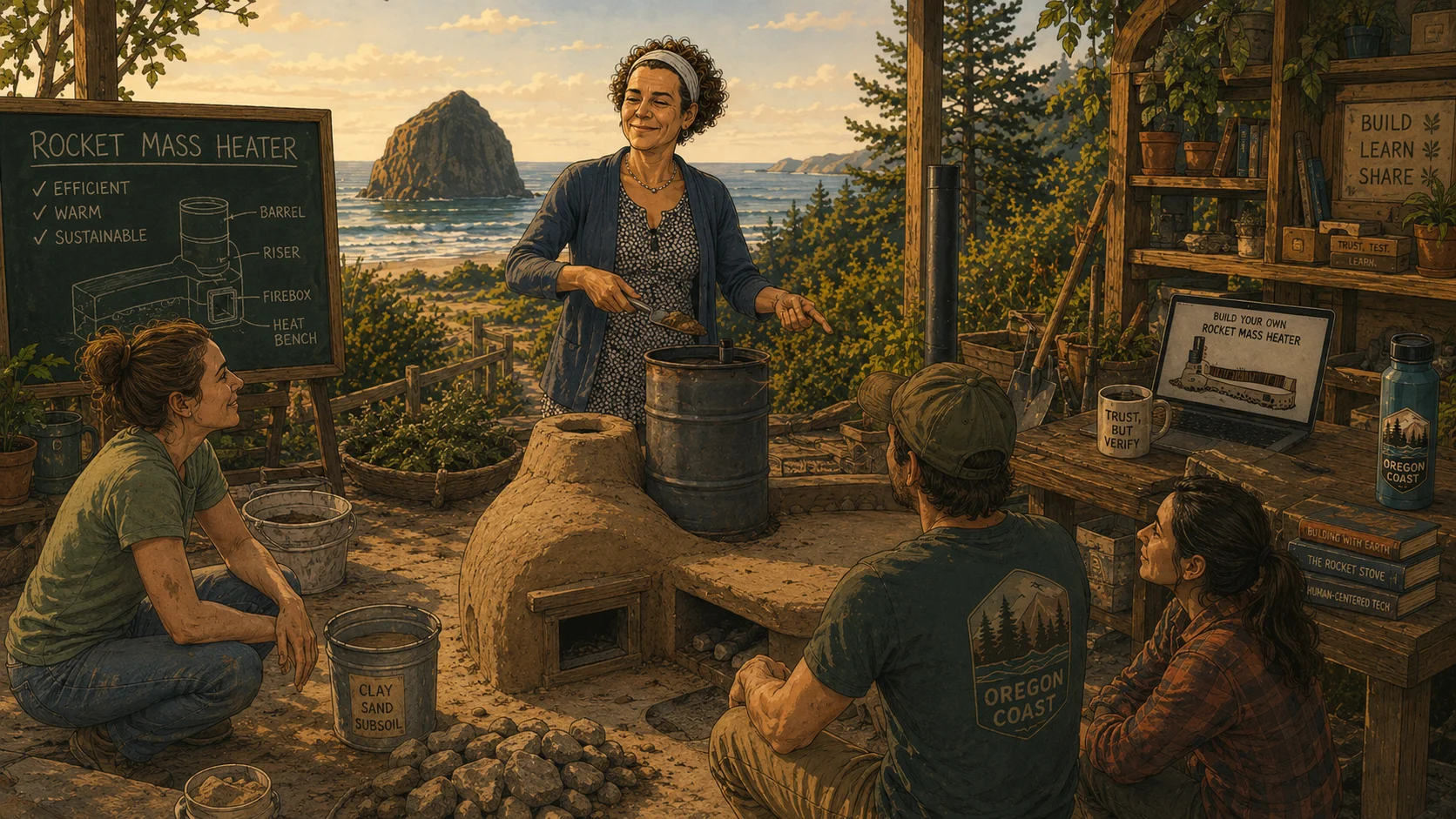
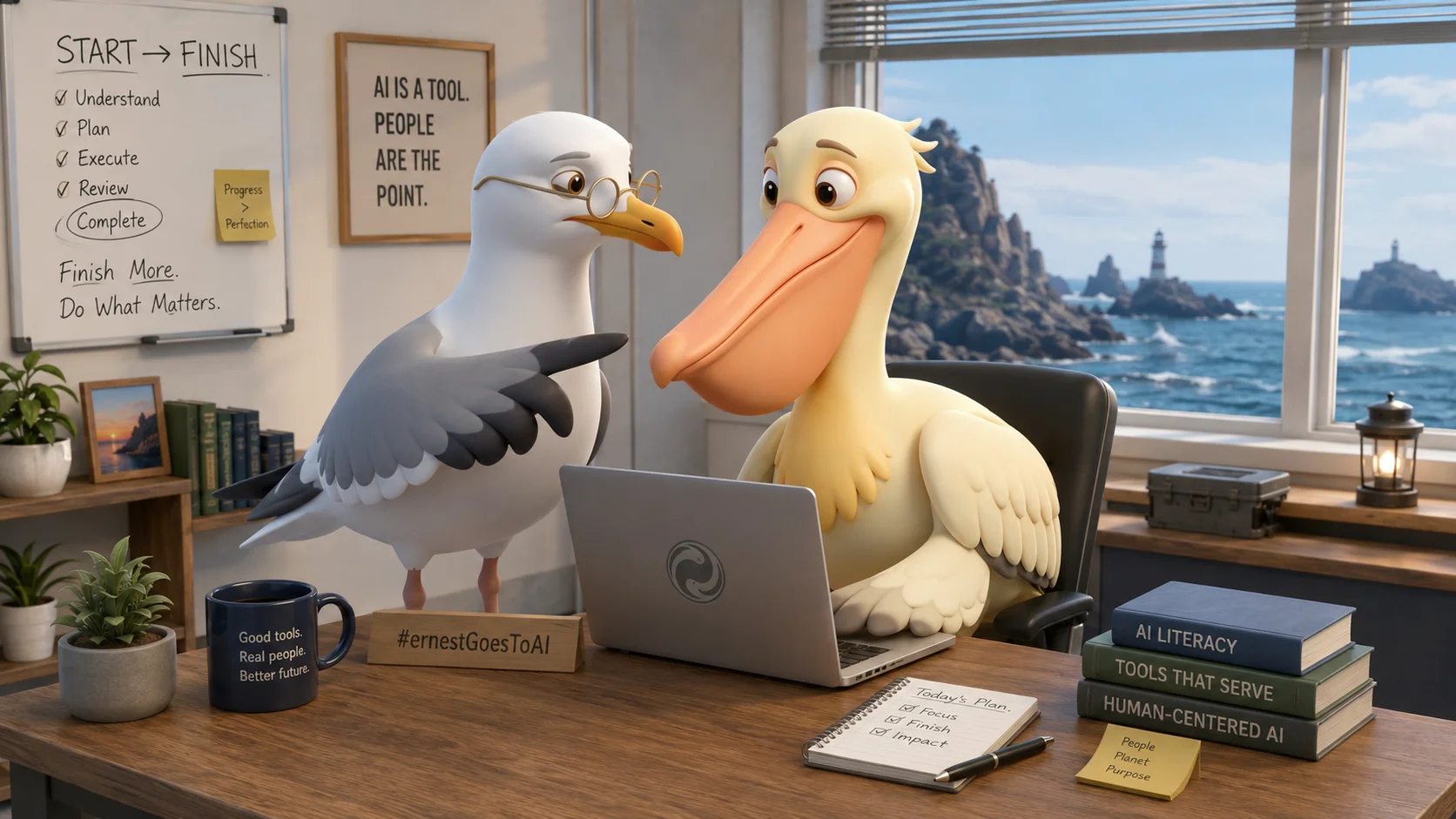
Read →My illustrated seagull kept sprouting human hands. The fix was not a better prompt — it was noticing which question I had left the tool to answer.
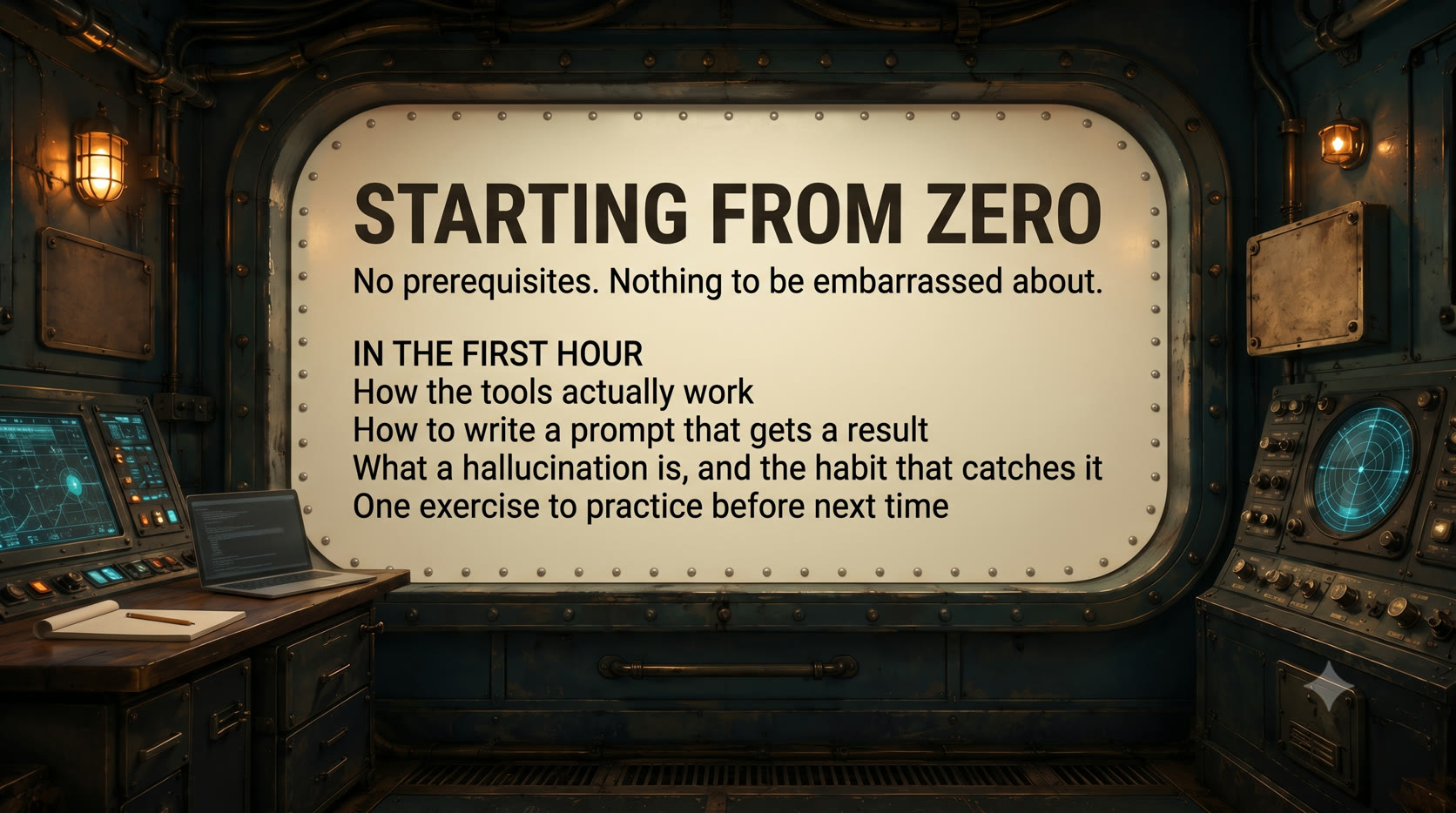
Read →Foundations is $75 for sixty minutes, and it assumes nothing. What an hour covers, what you leave with, and why the back office does not have to be your trade.
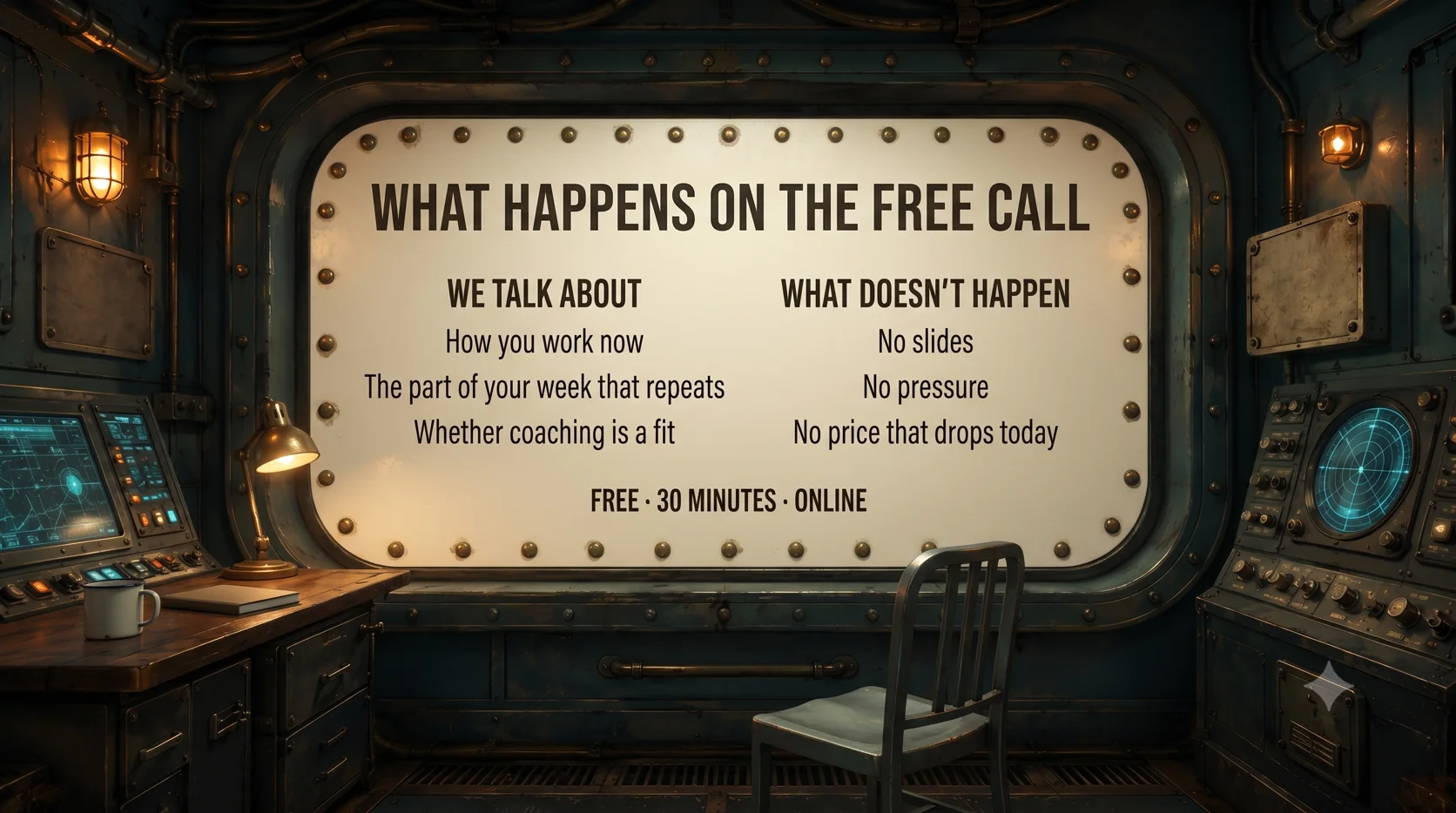
Read →A free first call is not a favor, it is the estimate. Here is the whole agenda for the thirty minutes, including the part where I tell you that you do not need me.
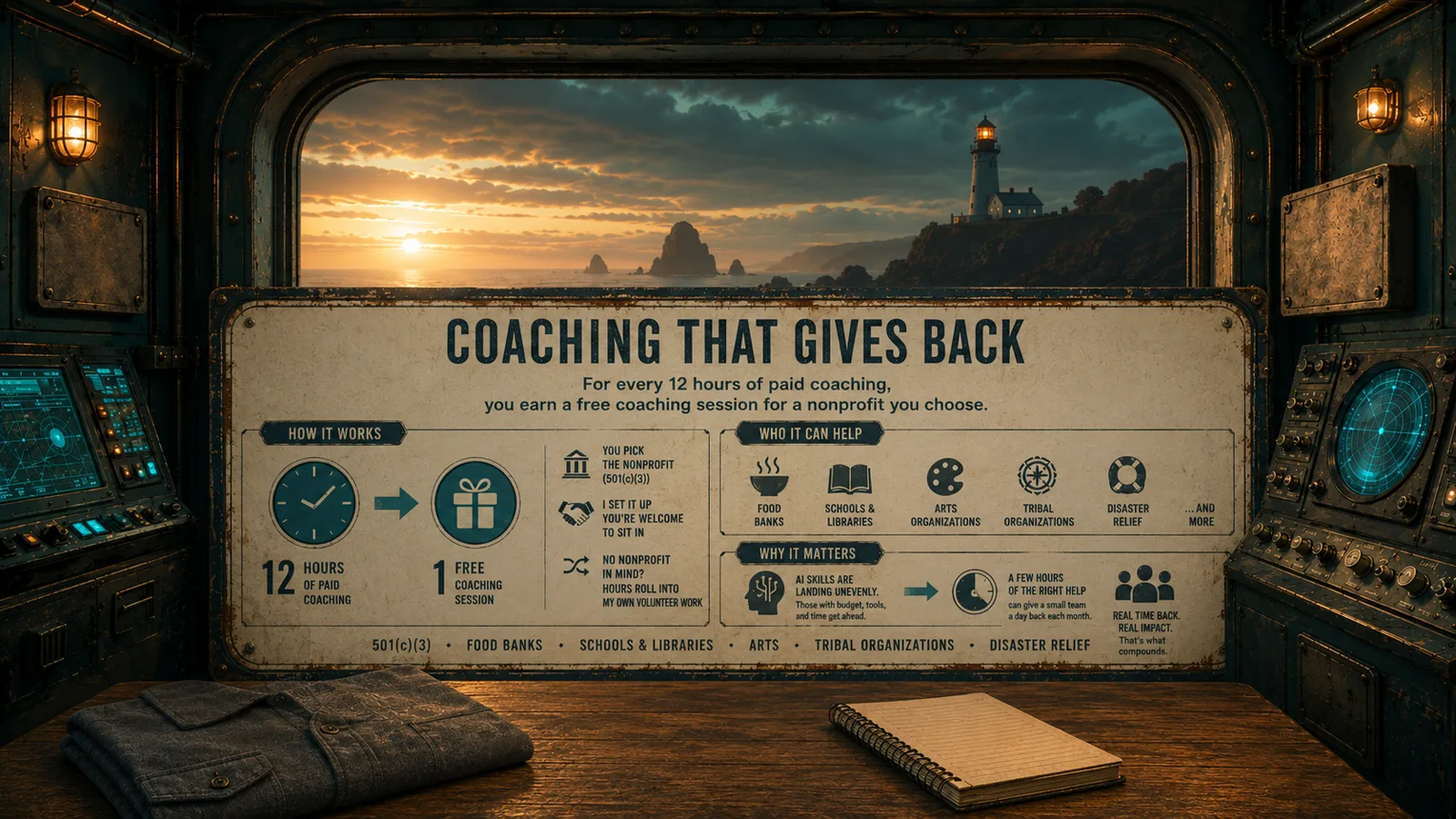
Read →The part of my practice I care about more than the pricing page: for every 12 hours of paid coaching, you earn a free session for a nonprofit you choose.
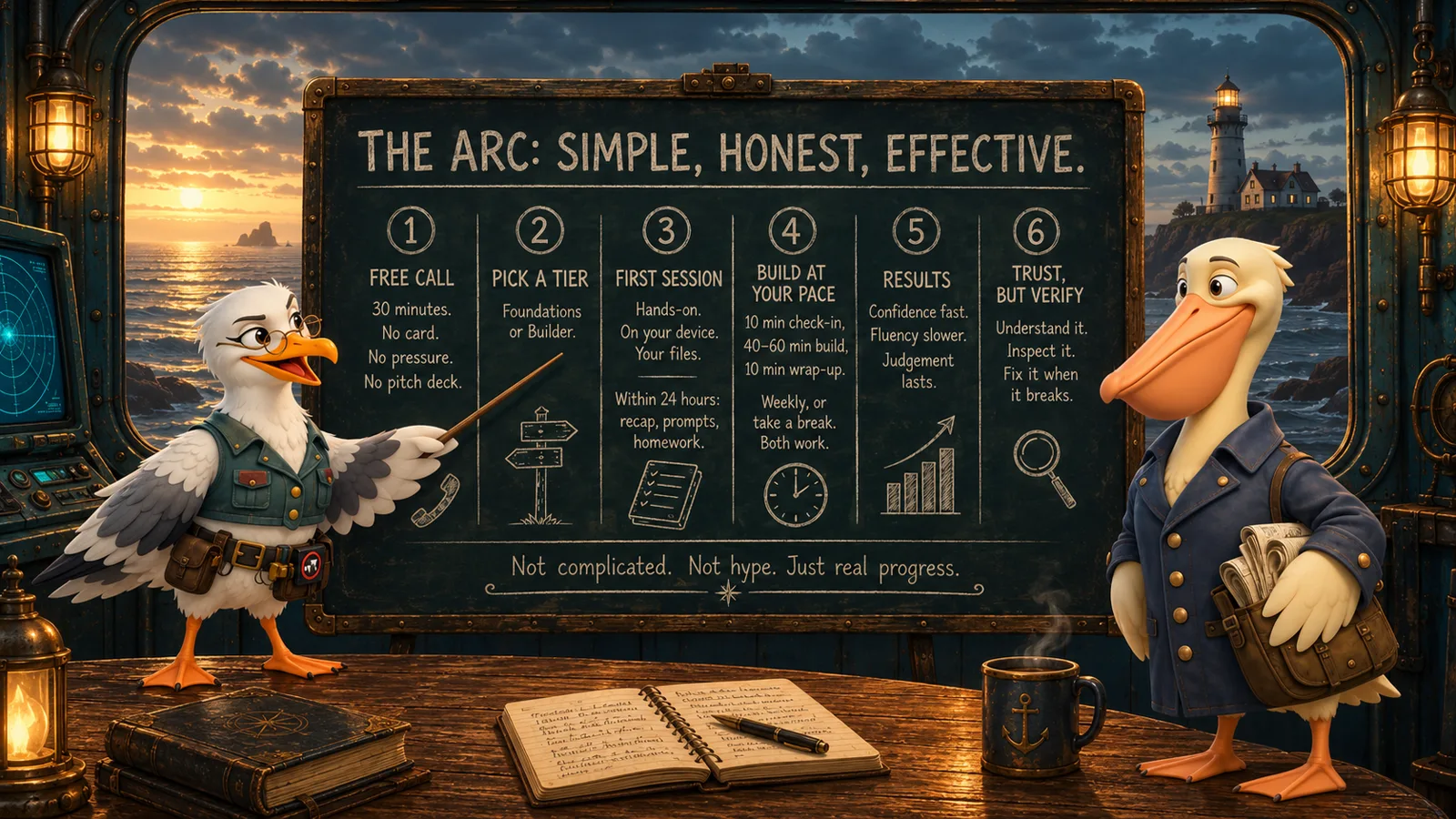
Read →Never hired a coach before? Here's the whole arc, no mystery — from the free intro call to the point where AI is just part of your daily toolkit.
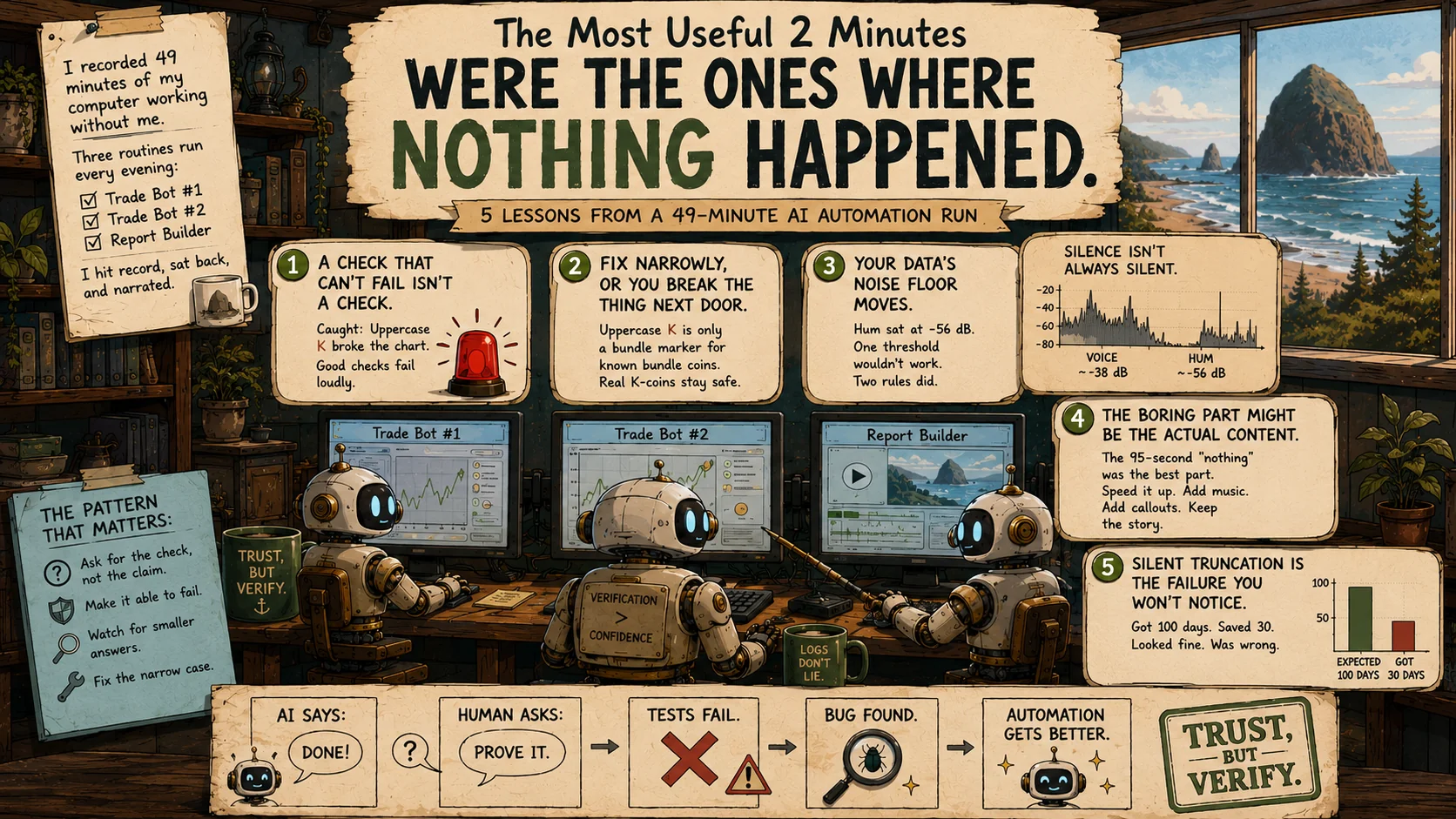
Read →I recorded 49 minutes of my laptop working by itself. The most useful two minutes were the ones where nothing appeared to be happening — five lessons from a night of watching AI automation run.
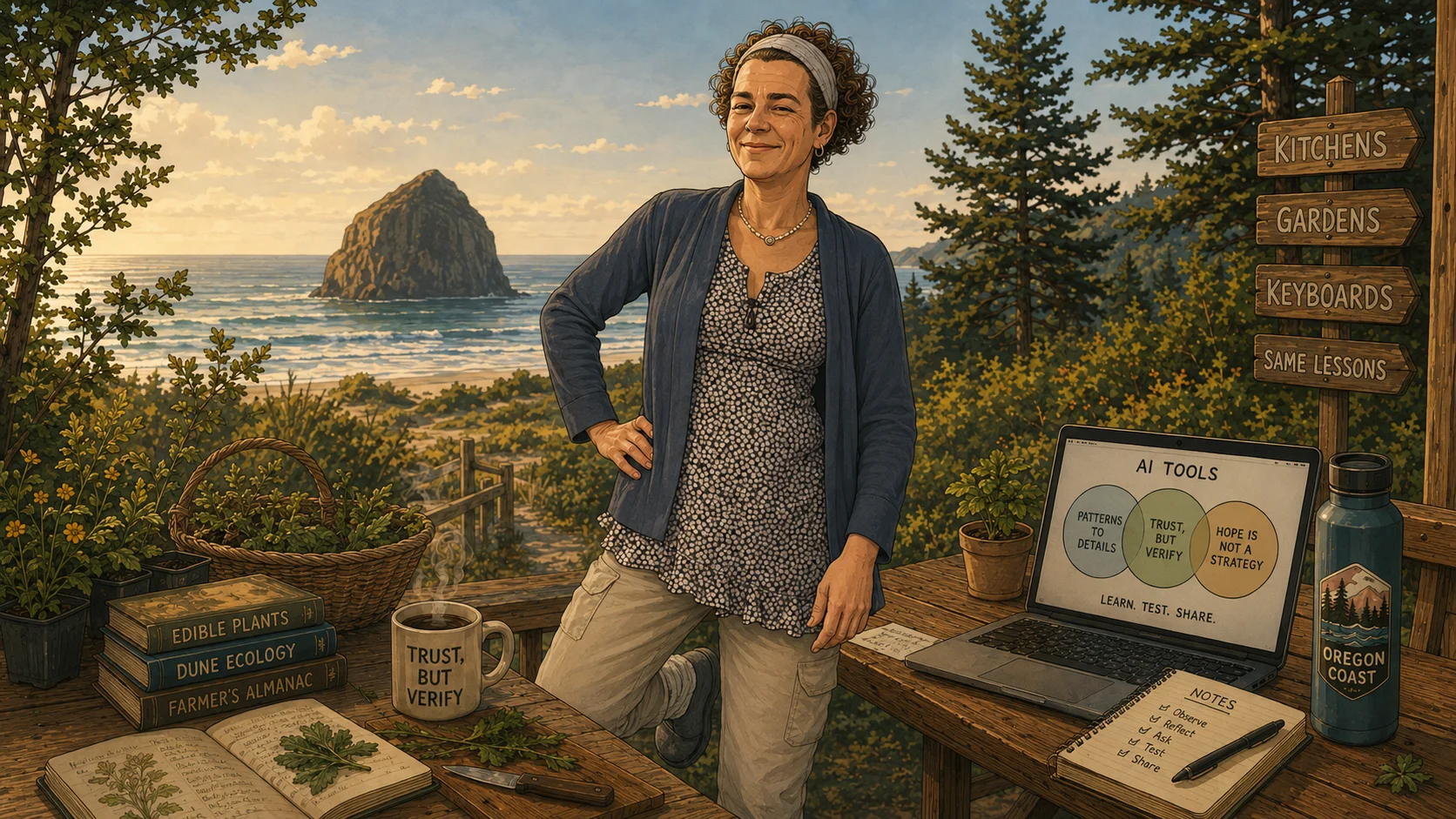
Read →From foraging wild edibles in the Indiana Dunes to coaching AI in Oregon — the story behind how I teach, and the three mantras that carry across kitchens, gardens, and keyboards.
Read →What 'human-centered' really means to me — I show up, work with your own tools, and help you solve a real problem. AI is a tool for people, and tools should make our lives and our planet better.
Read →