Who Is Ernest?
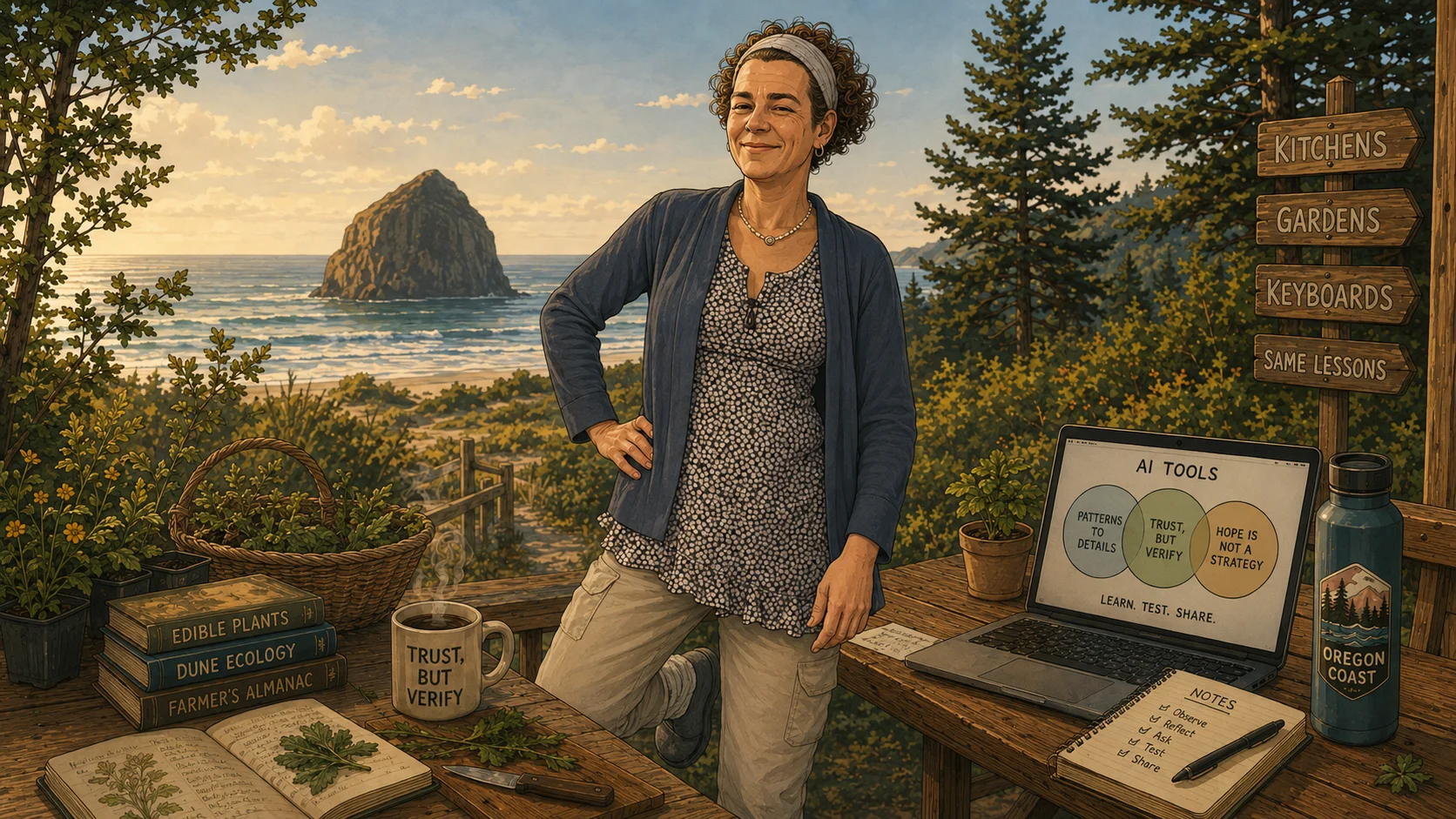
It started with wild edible plants.
Before any of this was about AI, I was a naturalist at Indiana Dunes National Park — learning the ecology of the dunes and, best of all, showing kids which plants along the trail you could actually eat. There's a particular joy in handing someone a snack they just found growing wild and watching their world get a little bigger. That never left me.
When I moved into farming, I found the same thing baked right into the culture: skill-sharing and local education aren't extras, they're just how things are done. And I noticed something else — farmers, and the nonprofits around them, usually didn't have much tech help. So over the years I kept ending up as the default IT person: the one who knew the cloud apps, could get the hardware talking to each other, and was always willing to poke at something just to see if it would work.
Kitchens, gardens, keyboards. I've worked with all three my whole life, for fun and for a living, and they have more in common than you'd think. All three reward the same things: patience, good systems, and working with what you've got instead of forcing it.
Three mantras have carried me through all of it — and every one of them applies to AI as squarely as it does to soil.
Patterns to Details. Find the clear pattern and the context first; then hammer out the specifics. Whether you're reading a landscape or pointing an AI tool at a problem, once you understand the shape of what you're trying to do, the tool can help you weigh your options and fill in the rest.
Trust, but Verify. Test your soil. Don't assume. Don't trust an AI tool to do something until you actually understand what it is — and isn't — doing. The biggest gift these tools give regular people is access to a whole range of digital skills far beyond searching for information. But that gift only pays off if you make the tool tell you what it's doing and why, instead of taking it on faith.
Hope is not a Strategy. See things as they are, not as you wish they were. Observe and reflect before you act. Don't just hope the tool will do what you want — check.
I've taught scary, jargon-heavy technology before. Working with digital cooperatives, I ran Discord streams walking people through blockchain-based apps for decentralized cooperation, project management, and self-governance. Emerging tech invents its own vocabulary that makes no sense from the outside — and a "decentralized, trustless network" sounds terrifying right up until you've used one to vote, build something, or transact, with someone beside you explaining the real security and efficiency tradeoffs. Once you've done it, it's just a tool. AI is exactly the same. Most of what I do is be that someone.
Because learning, for me, is a practice — like cooking, like growing food, like everything else I've spent my life on. There has never been a better moment to practice learning than right now, when the ground is shifting this fast. And honestly, the part I love most about teaching is a little selfish: I finally get to be the professional student I always wanted to be.
These days it's just me, here in Oregon, building this coaching practice on my nights and days off — no venture funding, no team, no hype machine. Working out what genuinely helps regular people and small businesses use these tools well, and being honest about what doesn't.
If any of this resonates and you'd like a hand with your own tools, the easiest way to reach me is a text to 503-664-0546 — or see how I put it to work in What I Do →.
#ernestGoesToAI