The Bird With Human Hands
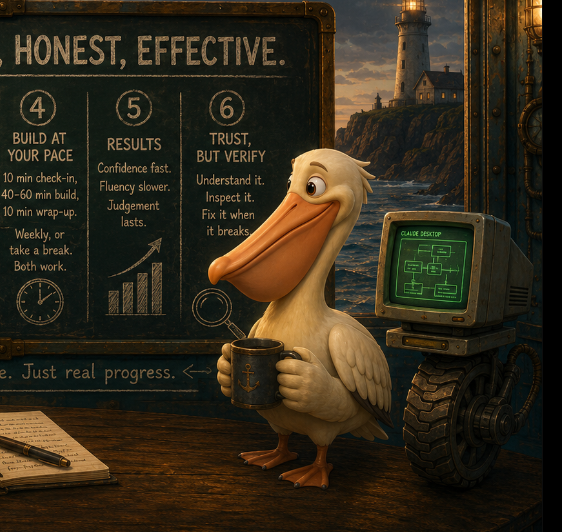
The seagull had hands.
Not wings arranged to look like hands. Human hands, with fingers, holding a mug, attached to a bird. I had asked for an illustration of a character I use, doing something ordinary, and the tool had quietly solved a problem I didn't know I had given it.
Here is what I think happened, and it turned out to be the more useful half of the story.
A bird has no arms. So when I hand a picture of a bird to an image tool and ask for that bird holding a mug, I have asked an unanswerable question — and the tool answers anyway, because that is what these tools do. It reaches for the most common thing in its experience that holds a mug, and that thing has hands.
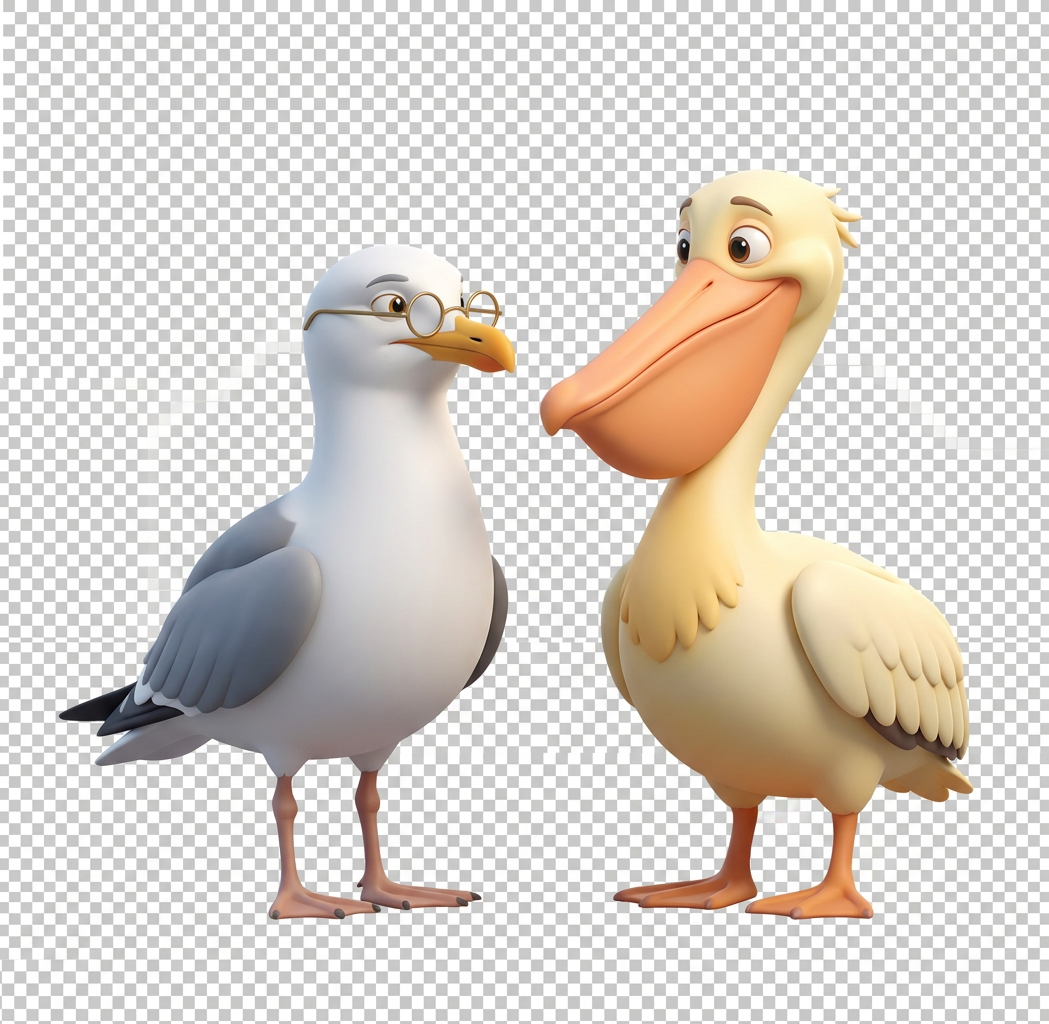 The moment I used a different reference — the same character, but wearing a coat, with sleeves, with the wings already drawn as something that could grip — the hands stopped appearing. Same tool. Same request. The difference was that the reference had already answered the question before the prompt could ask it.
That is the lesson I would keep if I could only keep one: anything you leave unresolved gets filled in from the average. Not from your brand, not from your intent — from whatever is most common. And the average is a stranger.
The second thing, which took longer to see
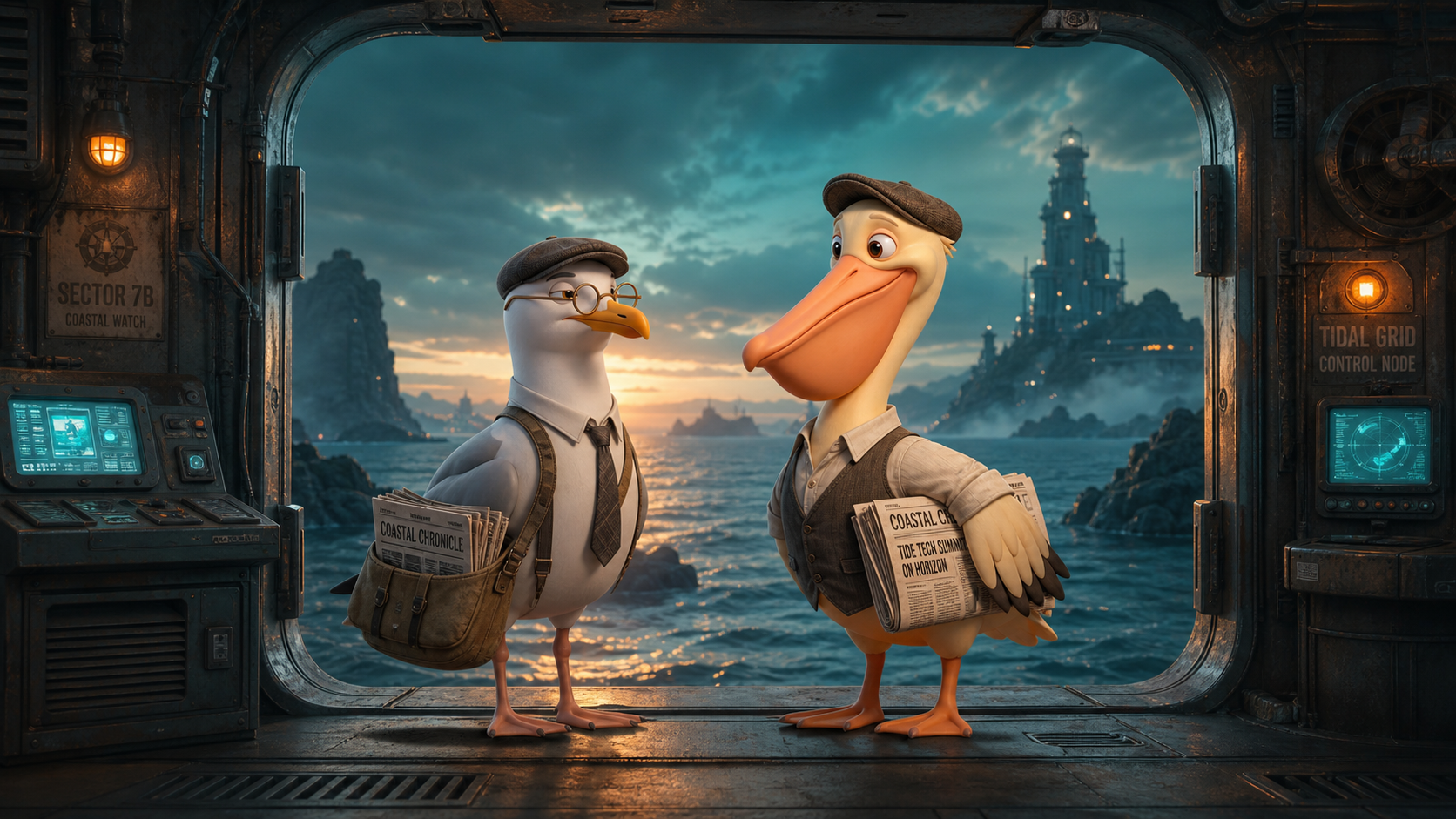
I had also been generating my characters inside the scenes they appear in. One prompt: room, mood, lighting, characters, all at once.
The rooms came out beautifully. The characters came out grim — gaunt, joyless, technically competent and completely wrong. For weeks I read that as a prompting problem and kept rewording it.
It was not a prompting problem. The characters and the environments are made by two different methods, and I was asking one method to produce both. The scene generator has no model of my characters. It never did. It was inventing plausible birds every single time, and plausible was the problem.
The fix was to stop asking. Now the scene is generated with no characters in it at all, the characters live as separate files with transparent backgrounds, and they get layered in afterward.
That change in approach achieved something I had been trying and failing to prompt my way into: the characters are now identical every time. Not similar. Identical — because it is the same file. Consistency stopped being something I hoped for and became something I could not lose.
Why I am writing this down
Because the expensive part was not the fix. The fix took an afternoon. The expensive part was the weeks before it, where I was confident I had a prompting problem and kept paying for that confidence in small installments. A reword here, another attempt there, each one cheap enough to justify and none of them getting closer.
That is the shape of most of the time I have lost to these tools. Not one big mistake. A wrong diagnosis, held patiently, funded in ten-minute increments.
What broke it was not a better prompt. It was asking a duller question: which part of this job is the tool actually good at, and which part have I been assuming it does. The scene generator was excellent at rooms and had never once been good at my characters. Nothing about that changed when I reworded the request, because the request was never the problem.
So when people ask what learning an AI tool looks like, this is the honest answer, and it is less exciting than the version in the ads. It is not a stock of clever prompts. It is building an accurate picture of where the tool's competence stops, and then arranging your work so you stop walking off that edge. The reference image with sleeves is not a trick. It is a boundary, drawn in the only place the tool could see it.
#ernestGoesToAI