What a Cheap Fix Is
I keep a log of things my AI tools got wrong.
Not a bug tracker. Not a list of complaints. A running note of the small corrections I made after something nearly went out the door with a mistake in it. I call the entries cheap fixes, and I have been keeping them since late July.
This post is about what qualifies, because the bar turns out to matter more than the list.
The near-miss that started it
I was drafting a page that linked to another page on my own site. The draft said the program had no approved list. It sounded reasonable. It read cleanly. It passed every automatic check I had.
The page it linked to says applicants need to be a registered 501(c)(3), and names the categories that qualify.
So the draft contradicted my own site, in a sentence nobody would have flagged. The checker I had could only see the text in front of it. It had no way to know what the linked page actually said.
The fix took about a minute to describe: before a draft is final, open every page on my own site that it links to, and check the draft's claims against what is actually there.
That is a cheap fix. Small, fast, and I only know to do it because something almost went wrong — which is the whole of the definition.
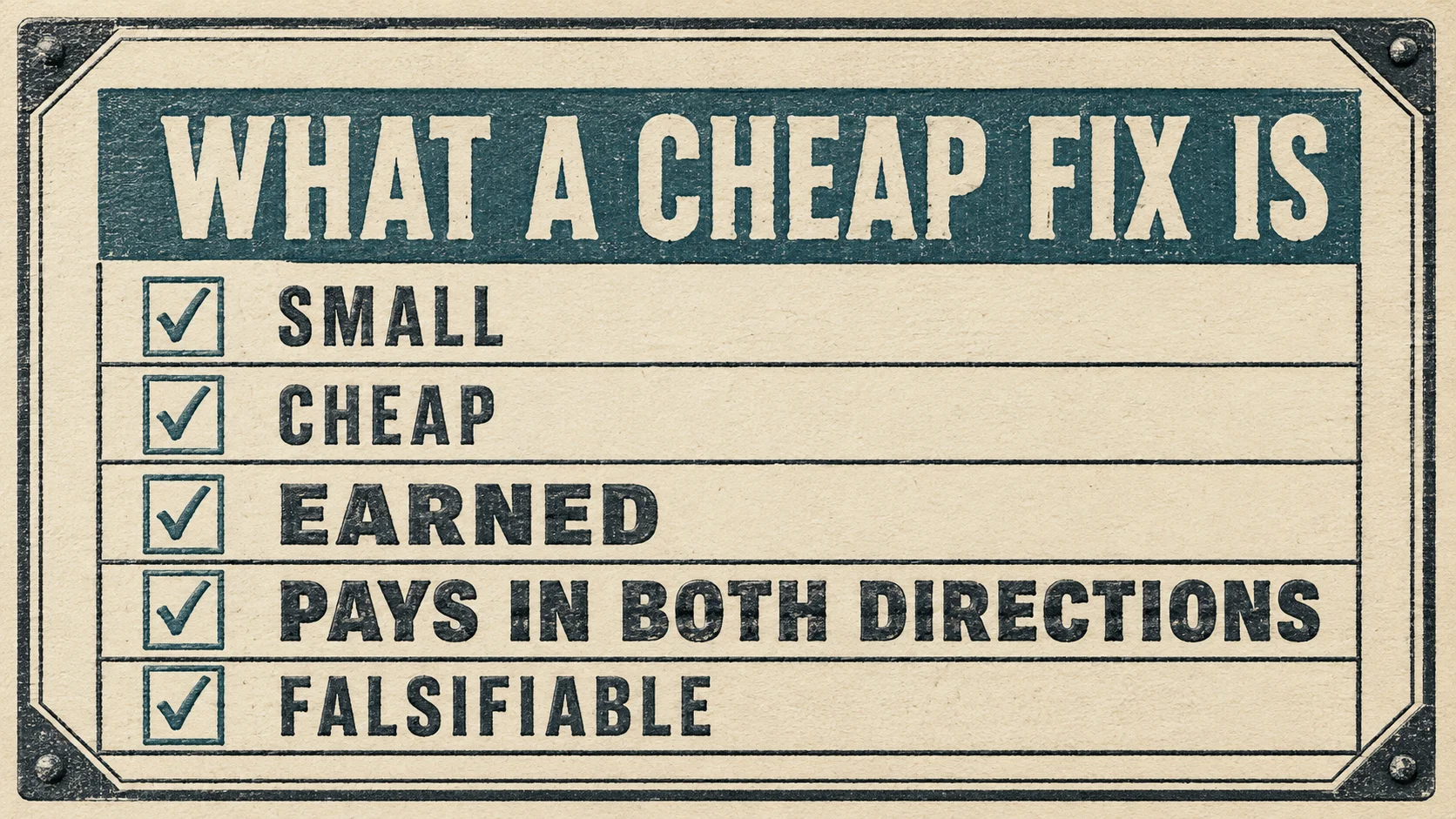
The five tests
Not every good habit qualifies. Here is the bar I hold them to.
Small. If it takes a project plan, it is a project, not a fix.
Cheap. It should cost seconds to minutes, every time, forever. A fix that costs an hour a week gets quietly abandoned in about three weeks — I have abandoned several.
Earned. It came from something that actually went wrong. Not from a best-practices article, not from something I read. If I cannot point at the near-miss, it does not go in the log.
Pays in both directions. This is the test most habits fail, and it is the one I care about most. A real cheap fix catches an error and makes the ordinary case better. Checking that linked page stopped a false claim. It also handed me a set of concrete details I would never have written from memory, which made the draft better on a day when nothing was wrong at all.
Falsifiable. I can tell whether it is working. Something either fires or it does not.
Fail the third or fourth test and what you have is a tip. Tips are fine. They are just not worth the trouble of logging, because you will not remember why you wrote them down.
The second one, which is a different animal
A while later I asked an image generator for a cover. The prompt asked for a folded grey work shirt on a desk. Nothing else about the shirt.
What came back had a real disaster-relief organization's patch on it. A genuine mark, belonging to a genuine group, on a commercial page selling my services. Nobody asked for it. It was not in the prompt.
It was also, awkwardly, true. I have volunteered with that organization for about a decade. The model had no way of knowing that, and it does not matter that it landed on something real. On a page selling coaching, a logo reads as endorsement or partnership, and I have neither.
The fix has two halves. The first is a standing block in every image prompt saying no logos, patches, badges, insignia or real organization names. The second half is the one I would not have guessed: it is usually better to leave the object out entirely than to ask for an unbranded version. A garment is where a patch wants to go. So the shirt came out of the prompt rather than getting de-branded.
Here is why this one sits in its own category. The first fix catches something stale, a claim that used to be true or was never checked. This one catches something invented, content that showed up in the finished artifact without ever existing in the instructions.
Nothing checks an image. There is no spell-checker for a picture. It got caught only because the notes beside the prompt listed what should appear, including a line saying that patch specifically should not.
Write the list of what must not be there, not just the list of what should.
I assumed keeping a log like this would feel like homework. It reads more like a receipt — a record of what a mistake actually cost, written while I still remembered.
More on what the pattern in them turned out to say, next.
#ernestGoesToAI